Fighting God’s Enemies

  Religion can bring out the best or the worst in mankind. It brings out the best, for example, when we follow the Great Commandment to love God with all our hearts and to love our neighbor as ourselves; or as similarly commanded in Islam, habluminallah, habluminannas.

Religion brings out the worst in mankind when we decide that we need to fight those people that we believe are God’s enemies—as though God is incapable of dealing with them Himself!

By bombing an abortion clinic, vandalizing a mosque, gunning down people in a gay night club, or honor-killing a family member who chooses to change her religion, we have left the most basic teachings of our faith in order to “help” God bring judgment against those we disapprove of.

In spite of all our efforts at peacemaking, such tragedies still happen—such as the kidnapping of Pastor Raymond Koh in Malaysia.

On February 13, in broad daylight, three black SUVs forced Mr. Koh’s white sedan to the side of the road and masked men abducted him, while five other vehicles operated by masked men kept traffic away from the kidnapping. But while the police were slow to respond,  CCTV footage from a nearby building appeared on social media recording the entire event.

The Koh family offered a reward for any information about Raymond, but for the last three weeks there has been only silence—no ransom demands or news of any kind. The Koh family is not rich enough for this abduction to be financially motivated. The only logical conclusion is that it was religiously motivated.

This is not how the Prophet Muhammad treated Christian pastors! By referring to the Ashtiname of Muhammad, or the Charter of Medina (and its modern parallel The Marrakesh Declaration), it’s clear that Muslims were commanded by their Prophet to not only establish religious freedom for minorities, but even to protect them.

A survey of how Jesus treated those of other religions leads us to a similar path of peace. When dealing with non-Jews such as Romans, Syrians, Canaanites and Samaritans, this is what Jesus DID: healed, delivered, told them to share their miracle stories, revealed himself as Messiah and King, praised them for their faith, praised them for exhibiting the righteousness God wants, and announced they’d feast in heaven with the earlier prophets. This is what Jesus DIDN’T do: follow his own culture’s prejudicial norms, condemn, rebuke, warn of judgment or hell, argue theology or debate, quote the Scriptures, explain the Gospel unless they asked, or ask them to change anything. He certainly didn’t condone any violence against them, teaching his followers by his own self-sacrifice to overcome evil with good.

The greatest barrier to peace today is not any particular religion—it is misguided religious followers that pursue hatred and violence in the name of God. [This is what my novel A VIOLENT LIGHT is all about!]

Please pray with me for the speedy release of Pastor Raymond Koh, and for his captors to return to the most basic tenets of their faith—habluminallah, habluminannas.


If Kindness Came First

pexels-photo-969612:00 AM. A deserted stretch of Texas highway. My five younger siblings and I stand amidst the tumbleweeds watching our widowed mother pray over our broken-down car.

Finally, we spot some headlights approaching. We desperately wave our fourteen hands. A red sports car slows, and pulls over behind us. Praise God, we’re saved!

Out of the car climb two of the biggest black men I have ever seen. Media stories about highway robberies bombard my mind. I’m the oldest male—what would I be willing to do to protect my mother, younger sisters and toddler brother?

“You guys need some help?” one of them asks.

After trying unsuccessfully to start our car, those two put their bulging muscles to good use, pushing our car a mile down the freeway to an exit ramp where we roll safely into a gas station adjacent to a motel. Then they walk the (extra) mile back to their car.

Twenty-five years later, that extraordinary act of kindness to strangers still causes me shivers of sheer wonder. It was one of those God-encounters that chipped away at prejudice in my heart, and led me down the peacemaking path I’m on today.

Thomas Cahill reminds us of a similar story where the hero turns out to be someone the audience would never have expected—the Good Samaritan:

“As we stand now at the entrance to the third millennium since Jesus, we can look back over the horrors of Christian history, never doubting for an instant that if Christians had put kindness ahead of devotion to good order, theological correctness, and our own justifications—if we had followed in the humble footsteps of the heretical Samaritan who was willing to wash someone else’s wounds, rather than in the self-regarding steps of the priest and the immaculate steps of the Levite—the world we inhabit would be a very different one.” (from Desire of the Everlasting Hills, New York: Doubleday, 1999. p.185)

In the midst of our theological debating, our crusading for justice, and our pursuit of the next great Christian conference, we’re in danger of provoking our culture to close their ears to our message, which sounds like a “resounding gong or a clanging cymbal,” because their eyes don’t see our acts of love (I Corinthians 13).

People will never see Jesus in us apart from kindness. Let us be humble enough to learn from Samaritans—from those of different ethnic or religious backgrounds than us. Some of the kindest people I’ve ever encountered have been Indonesian Muslims and Japanese Buddhists, both of whom revolutionized my concept of showing hospitality to strangers.

Or perhaps we could be humble enough to learn from those Americans we’re not likely to meet in our church, such as talk-show host and stand-up comic Ellen Degeneres, who says, “Most comedy is based on getting a laugh at somebody else’s expense. And I find that that’s just a form of bullying in a major way. So I want to be an example that you can be funny and be kind, and make people laugh without hurting somebody else’s feelings.”

Let’s have the humility to recognize that there are people who don’t believe the same theology we believe, but are following Jesus’ example of compassion, mercy and kindness better than we do! I think we should honor them (as Jesus did in his story), and get inspired. If Jesus can’t take us to a higher plane of self-less love than the world already demonstrates, what do we really have to offer?

How about we confront the world’s issues of prejudice, violence, racism, sexism, xenophobia and terrorism with a movement of 2 billion Christians showing extreme kindness to everyone? Wouldn’t that rock our world!

As one of the kindest people our generation has ever seen, Mother Teresa, once said, “Not all of us can do great things. But we can do small things with great love.” 

By pushing a stalled car, helping a crime victim, or even telling a joke kindly, thousands of people are already out there making the world a better place. It’s time we joined them.

“Book of the Year” Nomination–Vote for Peace!

awooh-front-cover   I’m happy to share that my recent thriller on confronting ISIS with the non-violent way of Jesus, A WAY OUT OF HELL, has been nominated for “Book of the Year” award in general fiction!

One of the criteria the judges will look at is votes from readers like you! Much like American Idol, I NEED ALL MY FRIENDS TO GO TO THE CONTEST WEBSITE AND VOTE FOR MY BOOK!

Here’s the website: Book of the Year 2017

It only takes about 1-minute to vote!

1) Enter your Name and Email Address

2) Select your identity as READER

3) Scroll down to find A WAY OUT OF HELL by Jim Baton in the FICTION / GENERAL section and SELECT

4) Scroll to the bottom of the page and fill the small circle if you don’t want to receive promotional emails

5) Click SUBMIT

   Winning an award like this is likely to get the message of peace out to more people.

After you vote, if you would please forward this post to those people you know who love peace and ask for their support, I’d really appreciate it too!

Thank you so much!


How Would Jesus Respond to the Travel Ban

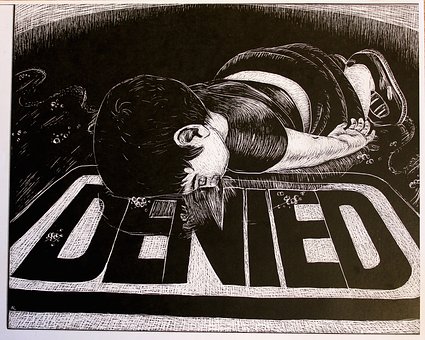
refugees-denied  Since President Trump issued the temporary travel ban against citizens from seven predominantly Muslim nations, there has been no end of controversy. Some foreign leaders have criticized it; others have supported it. Likewise, within America, many Christian leaders have joined in protests and petitions, while others have argued its merits.

What concerns me is the spirit behind these protests—are people truly concerned about the fate of refugees from Sudan or Yemen, or are they using this as an excuse to express their rejection of President Trump? Because if they’re truly stirred up by the needs of Muslim refugees, I’d like to know whether they’ve been doing anything constructive to help refugees before Trump came into office.

Through it all, I’ve asked myself over and over again, “How would Jesus respond?” Since I claim to follow Jesus, I want my response to align with his heart.

Jesus was often counter-cultural, never politically correct. But he reserved his few harsh rebukes for hypocritical religious leaders, not for political leaders. His breaking of cultural norms was always done in order to show love to hurting individuals. He healed the sick on the Sabbath; he didn’t condemn the woman caught in adultery; he asked for water from a despised Samaritan; he healed the servant of a Roman oppressor; he partied with tax collectors and sinners.

Jesus never joined other Jews who were protesting the government or planning violent attacks against it. The closest he got to a protest was driving the money changers out of God’s temple—again, dealing with his own religion gone wrong.

Does that mean I don’t support protests of government policies? I affirm the right to free speech that Americans hold dear, and I believe that peaceful protests can be an effective way to bring attention to issues of justice. I have joined in peaceful protests before, and will do so again. But I’ve done so not to represent Jesus’ heart of love necessarily, but more to support a community and an ideal that I believe in.

Now back to the original question, how would Jesus respond to the travel ban? In my heart, I am convinced that Jesus would respond by loving people, and no government restrictions or cultural controversies would stop his love.

So how about those of us who follow Jesus? How many of us would take the time to march in protest, or circulate a petition, or gripe on Facebook, in defense of these Muslim nations seemingly treated unjustly, but have never taken the time to get to know the Muslims who live in our own neighborhoods, or whose kids go to school with our kids? Which shows more love—marching alongside angry protestors, or walking alongside the Muslim children in our neighborhood to make sure they get from the bus stop to their homes safely? Shouting slogans against a government policy, or whispering words of comfort to a Muslim student unable to return home to her family during Ramadan? Perhaps some of us are doing both, and I commend you. But if we have time to invest in just one type of response, what would Jesus do?

What about those refugees we refuse to allow into our borders? There are many reputable agencies helping Syrian refugees that need our donations. One of my friends even volunteered at a refugee camp in Jordan for a short time. The travel ban neither eliminates our options to serve refugees, nor our responsibility.

The greatest need of the Muslim refugees is not entry to America. They need food and shelter. They need a chance to work and provide for their families. They need people to come alongside them and help them get back on their feet. They need our prayers, our donations and our love.

As the eyes of the world look toward America’s government and criticize its leadership in this global refugee crisis, what an opportunity for the Christians of America to model a different spirit, laying down our lives to love others. By doing this we will represent our nation well, but more importantly, represent the heart of our Savior well.

Words to Live By

readingEvery writer is influenced not only by his life experiences, but also by who he reads.

In a recent fun and fascinating interview on Carrie Schmidt’s wonderful blog, I was asked if I could only read 5 books (besides the Bible) for the rest of my life, which would I choose? Which would you choose?

After wrestling with that tough predicament, I decided to make a Top Ten List of those authors that have influenced me the most. For some of them, one sentence or one paragraph or one story has touched my heart so deeply that I’ll never be the same. And from others I’ve learned a tremendous amount about the craft of writing.

As I share my Top Ten List with you, I’d love for you to comment below if any of these authors have also influenced you. Or go one step further and share YOUR Top Ten!

Here we go!

  • Mother Teresa
  • Khalil Gibran
  • Jalaluddin Rumi
  • Rabindranath Tagore
  • Ted Dekker
  • Henri Nouwen
  • Gregory Boyle
  • Dick Francis
  • David Baldacci
  • Richard Rohr

I imagine some of these may be new names for some of you. You may recognize the three novelists: Ted Dekker, David Baldacci, and the British mystery writer Dick Francis. But if you haven’t read any of the other Magnificent Seven, you’re missing out!

These seven amazing people have given the world what might be termed “Wisdom Literature,” for the depths of their understanding of God, life and the universe. For me, the truest test of wisdom is whether or not the words inspire me to love. I can safely say that all of these seven authors have lifted my love-life to a higher plane, and I’m incredibly grateful.

Yet as I reflected on this list of seven names, I was shocked to discover that none of them are from my stream of faith. I consider myself a Protestant, but have found the sweetest water to come from the wells of 4 Catholics, a Maronite Christian, a Muslim Sufi, and a Hindu mystic.

Some of my Protestant brothers act as though we have ALL TRUTH, the Catholics may have partial truth, but the other religions have none at all. How arrogant we are! As though God would answer every seeking heart by saying, “Join the right religious group first, then I’ll begin to reveal Myself to you.” As someone who is a true Seeker of God, it’s not hard for me to recognize that same Seeking in others, no matter what background they come from. And since God promised, “All who seek me will find me,” (Proverbs 8:17), I can also recognize the Finding when I see it.

Here’s what I’m talking about—which of these quotes comes from the Christian, the Muslim, and the Hindu?

  1.  “In your light I learn how to love. In your beauty, how to make poems. You dance inside my chest where no-one sees you, but sometimes I do, and that sight becomes this art.” 
  2. “When you love you should not say, “God is in my heart,” but rather, “I am in the heart of God.” 
  3. “Give Me Strength–


This is my prayer to thee, my lord—strike,
strike at the root of penury in my heart.

Give me the strength lightly to bear my joys and sorrows.

Give me the strength to make my love fruitful in service.

Give me the strength never to disown the poor or bend my knees before insolent might.

Give me the strength to raise my mind high above daily trifles.

And give me the strength to surrender my strength to thy will with love.”

What is your guess? (Answers at the end of this article.)

Those Seekers of God who have gone before light my path with their words. I hope that my life and my writing, in some small way, will do the same for others.

I want to join Henri Nouwen’s questthe ongoing attempt to put one’s own search for God, with all the moments of pain and joy, despair and hope, at the disposal of those who want to join this search but do not know how.”

I welcome you to search with me! And to comment on YOUR favorite authors!

[Answers to quiz: 1) the Muslim Rumi; 2) the Christian Gibran; 3) the Hindu Tagore]

Unifying America

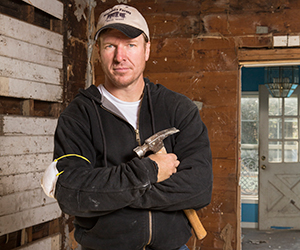
from HGTV website
Chip Gaines on HGTV’s “Fixer Upper”

Generally, those who have reviewed my novels on terrorism and peacemaking have been encouraging if not enthusiastic. However, I was recently blessed by a brutally honest reviewer who objected to some aspects of my newest book, A VIOLENT LIGHT.

This reviewer drew conclusions that because some characters in the book acted the way they did, that I must be anti-law enforcement, anti-veterans, anti-gun owners, anti-self-defense, and anti-sharing your faith. This person decided that because of how some characters tried to build bridges across the religious divide, that I must be a universalist. All of these assumptions were incorrect.

I felt the parallels right away when I read about HGTV stars Chip and Joanna Gaines from the show “Fixer Upper” getting blasted as LGBT haters because they attend a church that preaches that Biblical marriage is between a man and a woman.

I love Chip’s response: “We want to help initiate conversations between people that don’t think alike. Listen to me, we do not all have to agree with each other. Disagreement is not the same thing as hate, don’t believe that lie.”

Those who attacked Chip and Joanna are similar to the reviewer who struggled with my novel—they perceive issues through dichotomous, black-and-white thinking: “If it’s not this, it must be that.”

  • If you don’t support the war, you must be disrespecting our veterans
  • If you don’t support gay marriage, you must hate those of LGBT identities
  • If you don’t try to convince people of other religions that your religion is superior to theirs, you must be a universalist

We heard plenty of this narrow thinking during the recent presidential campaign. One friend basically told me, “If you are critical of anything Trump has said or done, you must be supporting Hilary,” while another implied, “If you agree with any one thing Trump has said or done, you must be endorsing racism, sexism, xenophobia and a host of other evils.” Neither of these people took the time to actually understand what I thought about either candidate or the issues, having instantly pigeon-holed me with “not this, so that” thinking.

I know some of my Christian friends question why I work for peace alongside Muslims when, according to their thinking, I should be convincing Muslims to agree with my religious views first before working with them. Once again, here’s Chip’s brilliant perspective: “If your position only extends love to the people who agree with you, we want to respectfully challenge that position. We propose operating with a love so real and true that you are willing to roll up your sleeves and work alongside the very people that are most unlike you.

“Fear dissolves in close proximity. Our stereotypes and vain imaginations fall away when we labor side by side. This is how a house gets unified.”

What a good word for America, and for our world! Disagreement should never limit our capacity to love and serve others. Can we post this on the wall of the Senate and House chambers? How about at city-wide pastors’ meetings? Or at any community event?

The truth is that most issues are complex, most people are complex, and anyone who tries to get a group of people to agree on every single thing is probably a cult leader. Assuming that someone who disagrees with us must be on the opposite end of the spectrum from us, must be intolerant or a hater, does not extend to them the grace that we wish would be extended to us in all of our complexity.

Where I live and pursue peace in Indonesia, our current president Joko Widodo models well what Chip is saying. While the extremists were issuing fatwas forbidding Muslims from even wishing Christians a “Merry Christmas,” our Muslim president ignored them and joined the Christians in their Christmas celebrations. Yasser Arafat did the same every Christmas between 1995-2000 attending Catholic, Protestant, Orthodox and Armenian church celebrations with the Christian minorities in Bethlehem.

Both cases opened the door to accusations from the black-and-white thinkers. Christians speculated that the president must have become a Christian. Muslim extremists concluded that the president must have left the true faith. Both sides were guilty of dichotomous fallacies; the truth was that though Joko Widodo and Yasser Arafat disagreed with the minority Christians in matters of religion, it didn’t stop them from showing honor, support, and perhaps even love. Nelson Mandela, a Christian, experienced the same treatment when joining prayers at a mosque of minority Muslims in South Africa. But these men rose above such narrow thinking because “this is how a house gets unified.”

Our divided nation cannot wait for us all to agree as a prerequisite to progress. It’s time we “roll up our sleeves and work alongside the very people most unlike us.” As we do, we’ll learn to understand each other, and undoubtedly change each other in the process.

Christmas in the Bible and the Al Qur’an

Govert Flinck – Angels announcing Christ’s birth to the shepherds (1639)

“Why do you think God announced the birth of Al Masih (the Messiah) to shepherds?” I asked my Muslim friend.

We had been talking about the Christmas story, and how the Al-Qur’an and the Bible emphasize different aspects of the story, but the Bible definitely includes a lot more detail.

Already mentioned were the similarities between the two accounts—of God visiting the virgin Mary to announce to her the miracle He was about to do by giving her a special son. The Bible tells how God chooses the boy’s name to be “Jesus,” literally, “God saves,” and that he will be called “Son of God” and rule over an everlasting kingdom. (Luke 1:26-38) Later God adds to the shepherds that Jesus is the “Savior…Christ the Lord.” (Luke 2:1-20) The Al Qur’an contributes that Jesus is a “mercy” from God, His Word and Spirit. (Surah Al-Maryam 19:16-21; Surah Al-Nisa 4:171)

The chapter of the Al-Qur’an named after Jesus’ mother Mary (Surah Al-Maryam) focuses in on the story of how Mary’s neighbors reacted wrongly to this immaculate conception, causing Mary to take refuge from them outside the village, but how God took care of her there.

The Bible accounts of Jesus’ birth in Matthew and Luke use a panoramic view to include several other characters in the story, such as the sky being filled with singing angels announcing Jesus’ birth to the shepherds, and the star leading wise men from the east to bring their gifts in worship to a new “king.”

So I asked my friend, why not announce Jesus’ birth to the governor or the king? Why not to the religious leaders? Why shepherds?

“Rich people often use their wealth for evil,” he replied. “Maybe the shepherds had pure hearts.”

“That’s so true,” I agreed. “And I think God wants us to know that He sees all of us. He sees the everyday people, like the shepherds, and He wants to include them in what He’s doing.”

“I have some goats,” my friend boasted. “I’m a shepherd too, you know.”

I smiled at him. Yes, I did know. And I knew that he lived a self-sacrificing life trying to raise four children after the untimely death of his wife, but he had never resorted to wrong ways of obtaining money. He’d worked hard, treated people well, and trusted God. He had a pure heart. And I knew God saw this, and loved him.

“How about this one?” I continued. “Why did God announce the Messiah’s birth to foreign wise men? Were there no wise men in Israel?”

My friend had no answer for this. So I shared my idea: “I think God wanted us to know that this Messiah’s birth was not just for the people of one country, but for everyone around the world.” And for me living in Indonesia, I wanted to add, “I’m a foreigner too, you know.”

No other birth in history has been marked with so many signs—a special star, a heavenly choir, a virgin-birth miracle, so many people receiving dreams and visitations, numerous prophecies fulfilled… No other baby has been given such illustrious names to live up to—Savior, Son of God, eternal King, God’s Word and Spirit, God’s mercy to mankind… Truly this is a birthday worthy of being remembered by Christians, Muslims, and anyone who respects what Jesus brought to this earth.

But for my friend and me, this Christmas we’re challenged to remember that God cares enough about us to include us in what He’s doing—even if we’re only lowly goatherds or foreigners—perhaps He’s just looking for someone with an open heart.

Merry Christmas!

Muslims Crack Me Up

from historiccity.com

Recently I wrote about how Muslim Americans may be more afraid of you than you are of them! (See my post 1001 More Ways to Die in America.) With all the prejudice Muslims face, sometimes even the threat of personal violence, how can they best respond?

If American Muslims chose to hide, or to be offended and angry, I think it would be totally understandable. But even though the stereotype of Muslims is that they’re overly serious, many of them choose to face difficulty with a wonderful sense of humor. In fact, there are some terrific Muslim-American comedians I’d like to introduce you to.

On December 1st Arab-American comedian Mo Amer was seated on a plane to Scotland next to none other than Eric Trump. He was thrilled. “Sometimes God just sends you the material,” he tweeted.

Being a Muslim-American is tough these days, whether you’re trying to get through TSA at the airport or just trying to fit in at your job or in your neighborhood. For Mo Amer, it’s learning how to get along with the gun-carrying cowboys of Texas.

He tells about growing up in Houston and being put in ESL class where he learned Spanish—which came in handy. When kids picked on him for being a Muslim or an Arab, he pretended he was a Mexican instead. But it hasn’t helped his 20-year quest to receive his citizenship. He’s pretty sure his first name being “Mohammed” has something to do with the delays. But what can he do except laugh? Catch his comedy here.

American comedian Ahmed Ahmed feels like racism and religious conflicts “are not going away,” but that laughter is one common meeting point for us all. Once Ahmed took 10 American comedians on a comedy tour of the Middle East called “Just Like Us.” The resulting documentary earned him an invitation to the White House. Explore his comedy here.

Maysoon Zayid, perhaps the first Muslim woman standup comedian in America, co-founded the New York Arab-American Comedy Festival in 2003, with the goal of changing the negative image of Arab-Americans in media. She also speaks out for the handicapped. Maysoon has cerebral palsy. But she says that’s only one of her many problems: “I’m Palestinian, Muslim, female, disabled…and I live in New Jersey.” “The world is broken,” Maysoon admits, “but I believe we can fix it.” Check out her comedy here.

“People say stupid things to me all the time,” says American comedian Azhar Usman, a large Arab-looking man with a full beard. He tells about waiting at a stop light when a car full of young white men pulls up and they start taunting him. “What’s up, Osama!” the driver yells. Before he can respond, another guy calls out, “Yeah, what’s going on, Gandhi!”

Azhar was confused—how could he be Osama and Gandhi at the same time? “What is this—terror through non-violence? I will kill you—by not eating?”

But in spite of the racism and xenophobia Azhar experiences, he chooses to see hope. “We are actually witnessing this country undergo a transformation in front of our eyes, it’s amazing,” he claims. If you want to know why, try his comedy here.

When these comedians share their true horror stories but choose to laugh, the audience is drawn into a new empathy for what Muslim-Americans have to go through. Their human qualities shine through, and the audience realizes that though we face different types of difficulties in life than Muslim-Americans do, as Ahmed Ahmed says, they’re “just like us.”

DISCLAIMER: This is not an endorsement of any comedian’s opinions or their use of coarse language. This is simply a recognition of their efforts to build bridges through laughter.

1001 MORE Ways to Die in America (part 2)

huffingtonpost.com
photo from huffingtonpost.com

Recently I addressed the fear that many Americans face that Muslim jihadists may infiltrate our nation posing as refugees and conduct terrorist attacks against us. I argued that although this is possible, living in fear of such an event makes no more sense than living in fear of lightning strikes or of dying from falling out of bed—both of which caused more deaths in America last year than Muslim terrorists did.

But have you ever paused to wonder how your fellow American citizens feel, who happen to be Muslims? Do you think they might also struggle with fear that anti-Muslim vigilantes in America might attack them?

The Center for the Study of Hate and Extremism reported an estimated 260 violent attacks against Muslims in America during 2015, the highest total since the months immediately following 9/11. They hypothesized that anti-Muslim political rhetoric was the primary cause in the increase.

CNN writer Daniel Burke summarizes the vicious variety in these attacks in his article, ”The Secret Costs of Islamophobia.” (http://edition.cnn.com/2016/09/23/us/islamerica-secret-costs-islamophobia/index.html)

   Muslims have been shot and killed, execution-style, in their living rooms and outside of their mosques. They have been fatally stabbed on their way home. They have been beaten in their stores, in their schools and on the streets. They have been kicked off airplanesegged outside Walmartscorched with hot coffee in a park, shot in cabs and punched while pushing their children in strollers. Their clothes have been set on fire and their children have been bullied. Men have come to their door and told them that they would burn down their house if they did not move away. They have been fired for wearing hijabs and for praying. They have seen their cemeteries vandalized and their Quran desecrated. A Muslim congressman has received death threats, and business owners have posted signs advertising “Muslim-free zones.

   Heavily armed men have protested outside mosques in Texas and Arizona, arguing that it’s their patriotic duty to protect the country from Islam.

   People have covered the doors of a mosque with feces and torn pages of the Quran, left a severed pig’s head outside a mosque, firebombed mosques, urinated on mosques, spray-painted the Star of David and satanic symbols on mosques, carved swastikas and crude drawings of penises into signs at mosques, set fire to mosques, threatened to blow up mosques and kill “you Muslim f****,” fired rounds from high-powered rifles into mosques, wrapped bacon around the door handles of mosques, left hoax bombs and fake grenades at mosques, threatened to decapitate congregants at mosques, sent suspicious substances to mosques, written notes saying, “We hate you,” “We will burn all of you” and “Leave our country” to mosques, rammed a tractor-trailer into a mosque, thrown bricks and stones through the windows of mosques, pelted Muslims with rocks as they left mosques and stood outside mosques shouting, “How many of you Muslims are terrorists?”

This type of behavior breaks my heart! Does it break yours? Every one of those events happened to real people—nurturing fathers, gentle mothers, children wide-eyed with innocence—people just like you and me.

If you think you have something to be afraid of because one Muslim family moved into your neighborhood, how do you think they feel, surrounded by non-Muslims, with no idea who might be a violent, gun-carrying Muslim-hater that might attack them while they’re pushing their baby in a stroller down the sidewalk?

Fear goes both ways. And in 99.999% of the cases, that fear of the unknown can be shattered by walking up and introducing yourself, getting to know your neighbor, and starting a friendship. Every Muslim American needs non-Muslim friends to feel safe. And every Muslim you reach out to in love means one less fear you’ll have to worry about on your checklist.

I challenge you—the next Muslim you see, determine in your heart to approach him or her with a smile and introduce yourself. Ask about their family, work and dreams. Then write me and tell me what happened.

And try to do this before Christmas comes and finds you singing, “Let there be peace on earth, and let it begin with me…”